Thread milling and tapping are two extensively made use of machining processes for producing interior threads in various products, each offering distinctive advantages and drawbacks that make them ideal for various applications. When it comes to selecting the best approach for thread creation in their corresponding tasks, understanding the subtleties of these procedures is critical for machinists, designers, and manufacturers. Thread milling is a multi-tooth milling operation that entails utilizing a revolving tool to cut strings into the work surface. The device moves in a direct and round activity to create the wanted thread account, and it is capable of generating strings of various sizes and pitches. This process differs from conventional tapping, which employs a single-point tool that reduces strings into the material as it is turned and progressed right into the work surface. Among the primary benefits of thread milling is its adaptability; it can produce a wide range of thread types, consisting of criterion, custom, left-handed, and a lot more, depending upon the layout and requirements of the task. Due to the fact that thread milling employs a round movement combined with straight feed, it enables for the development of threads in materials that are brittle or tough, which would otherwise be challenging for tapping operations.
Tapping, on the various other hand, is effective and simple for straight thread development, specifically in softer products. It makes use of taps that can vary in dimension and layout, and while it is incredibly effective for producing threaded openings, it is limited in regards to material compatibility. Tapping can result in problems such as tool damage, particularly in harder metals, or shallower threads with restricted depth capabilities, which can impede its performance in particular applications. With tapping, any kind of misalignment during the threading process can lead to damaged strings or perhaps broken taps, which can be costly in terms of both time and sources. In comparison, thread milling decreases the probability of such problems due to its reduced reducing pressures and boosted flexibility, enabling less complicated device course modifications in multi-axis CNC machines. Thread milling can create threads with higher accuracy and much better surface finishes, which is commonly important in high-precision applications such as aerospace and clinical tool production.
Explore thread milling vs tapping the essential distinctions between thread milling and tapping, two essential machining processes for inner thread development, to determine the most suitable approach for your projects.
In terms of tooling and equipment needs, tapping commonly needs a faucet holder and a device with the ability of moving the tap right into the workpiece at a fixed rate. However, thread milling requires a various configuration, usually employing a CNC milling device and specifically developed thread mill cutters. These cutters have multiple flutes, which permits greater chip elimination and extended tool life, eventually boosting efficiency. Another point worth pointing out is the cost-effectiveness of these processes. While thread milling devices can be a lot more expensive upfront because of their complexity and layout, the durability and convenience typically balance out the first investment. Thread mills can be used to produce a range of thread dimensions, while faucets tend to be much more application-specific, needing added inventory and upkeep costs.
Device life is an additional important factor to consider when picking in between tapping and thread milling. Taps, particularly when used in tougher products, can wear down rapidly, necessitating constant replacements. This consistent requirement for new faucets can inflate operational prices, especially in high-volume manufacturing settings. On the other hand, thread mills, with their multi-point design, normally display long term device life, especially in difficult products. Furthermore, thread milling can accommodate deeper strings, which benefits the machining of blind openings where tapping might not provide the same results. The threading depth for tap applications is typically restricted, whereas thread milling can exceed these limitations, adding even more to its convenience.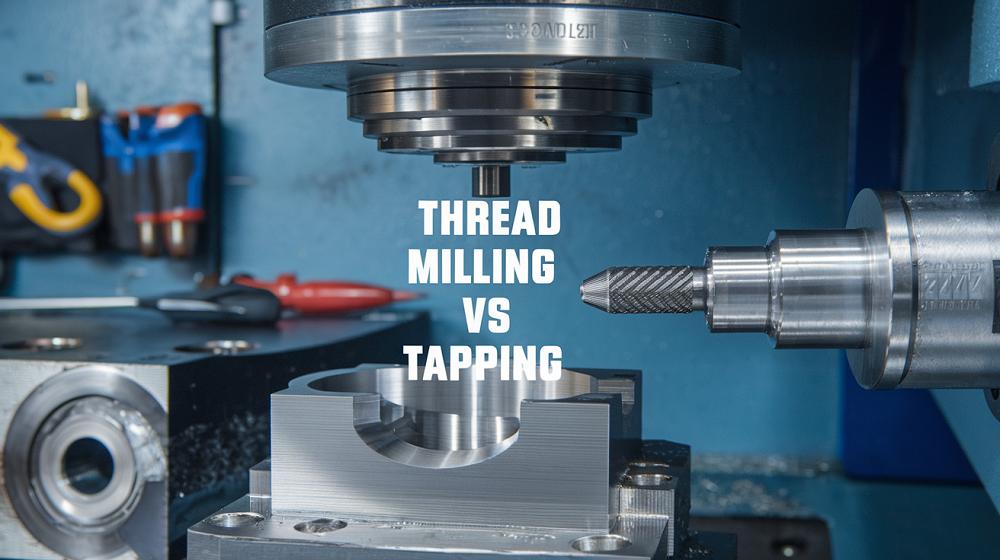
One more consideration when selecting in between thread milling and tapping is the element of threading resistance. Thread milling permits for tighter resistances, offered its capability to change feed rates and the top quality of the created thread types.
In many situations, the choice to utilize either thread milling or tapping might come down to the certain application at hand. If a maker requires to create an extremely accurate thread in a customized dimension and form within a tough material, thread milling would likely be the much more ideal choice.
Ecological considerations additionally play an expanding role in the selection of machining processes. Thread milling systems tend to produce much less scrap product contrasted to tapping, which can cause reduced waste and a more lasting manufacturing procedure. Additionally, thread milling procedures typically call for less power consumption with time, specifically in high-production environments where device life and efficiency are critical factors for success. Lasting manufacturing techniques are becoming a lot more essential to manufacturers and consumers alike, making the performance of procedures like thread milling specifically appealing in today’s market.
Safety and security is another essential aspect when examining the benefits and drawbacks of either machining approach. Tapping can frequently bring about unsafe circumstances like unexpected damage or jamming of the tap in the workpiece, which can be harmful for drivers. Thread milling generally offers raised safety, as the style and operation of milling tools reduce the likelihood of such sudden failings. CNC milling devices frequently have integrated safety and security functions that even more mitigate dangers related to tooling, providing a controlled atmosphere that can be essential in making sure the security of operators.
As services progressively aim to boost producing processes and outputs, recognizing the complexities of both thread milling and tapping offers a beneficial opportunity for organizations to enhance their procedures. While tapping may supply an effective option in details situations, particularly for conventional strings in softer products, thread milling verifies advantageous in setups that need convenience, precision, and the ability to function with a range of materials.
Finally, the option in between thread milling and tapping prolongs past mere choice; it incorporates a wide range of factors consisting of material homes, thread specs, and general production objectives. By recognizing the strengths and constraints of each technique, machinists and designers can much better adapt their methods, thus improving efficiency and making certain ideal results in their projects. Whether via tapping or thread milling, the ultimate aim continues to be the same: to attain premium threaded attributes that fulfill the rigorous needs of modern-day manufacturing while taking into consideration cost-effectiveness and manufacturing sustainability. As modern technology remains to develop, the landscape of thread generation will unquestionably progress, with developments in tooling and machining techniques enabling even greater accuracy, effectiveness, and flexibility in future production processes.