
Villains · wolves · the talk around them
Grand Méchant Buzz
The big bad villains of film, TV and fairy tales, and why everyone keeps talking about them.
The rogues’ gallery
Six faces every story seems to need
Villains come in families. Once you can name the type, you start to see it everywhere, from bedtime stories to the latest box set.
-

No. 1The Shadow in the CloakPower without a face. We fear what the hood hides more than anything it shows. -

No. 2The Mirror QueenVanity turned into a kingdom. She asks the question; the answer starts the story. -

No. 3The Grinning TricksterChaos with good manners. The joke is always on someone else, until it is not. -

No. 4The Thing BelowThe monster as weather: vast, old and patient, with a lantern to lure you in. -

No. 5The Gentleman SchemerTen moves ahead and very polite about it. The chessboard is never just decoration. -

No. 6The Hunter in the SnowHalf wolf, half rumour. You hear about them long before you see them.
Chapter one, every time
The wolf through the ages
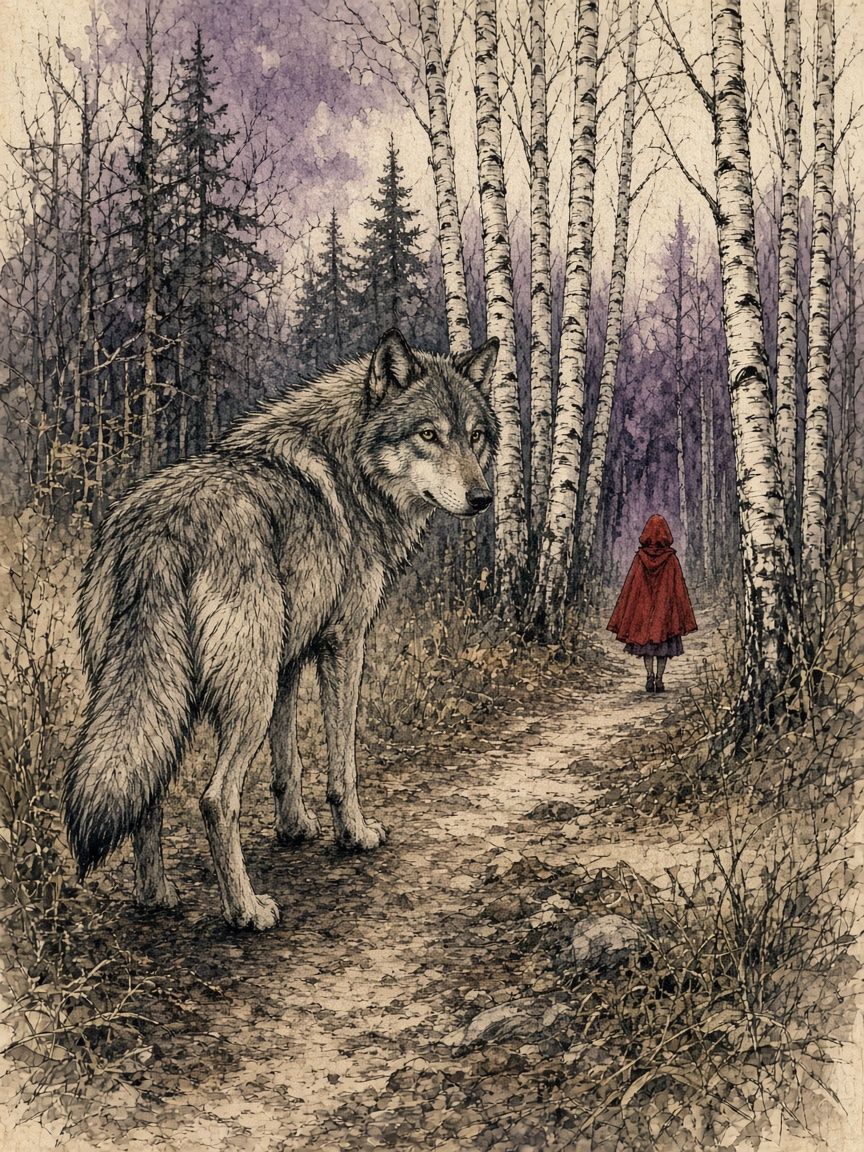
Long before cinema, the wolf was already the villain of choice. Aesop’s fables gave it a sheep’s fleece to hide in. Charles Perrault’s 1697 Little Red Riding Hood ended with the wolf winning and a sharp moral about charming strangers. The Brothers Grimm added a huntsman and a happier ending in 1812, and English nursery tales sent the wolf huffing and puffing at three little houses of straw, sticks and brick.
In French the creature is le grand méchant loup, the big bad wolf, which is where this site takes its name. The twentieth century gave the wolf an orchestra in Prokofiev’s Peter and the Wolf, a cartoon career, and lately a second chance: retellings now ask whether the wolf was hungry, framed or simply misunderstood.
Read Big Bad WolvesPinned to the board
Theories that keep the talk going
- The mentor knewThe wise guide had the map all along and let the hero struggle on purpose.
- Unreliable narratorThe person telling the story is the one we should have watched.
- The twin switchTwo characters are never seen in the same room. Viewers notice.
- Villain was rightThe plan was terrible, but the grievance had a point.
- Hidden loopThe last scene is quietly the first scene, if you squint.
- Not dead yetNo body on screen? The audience assumes a comeback.
The villain-line wall
Things villains always seem to say
Not quotations, just the familiar shapes of a good villain speech, paraphrased so you can hear them in any accent you like.
- “We are not so different, you and I.”
- “You have walked right into my trap.”
- “Mirror, tell me again who is the fairest.”
- “All the better to see you with, my dear.”
- “Before you go, let me explain my plan.”
- “This is not over.”
- “Did you really think it would be that easy?”
- “I will huff, and I will puff…”
- “One day, they will thank me.”
Spoiler-safe questions
Before you go into the woods
Will I find spoilers here?
The guides talk about villain types and old tales, which are fair game. When a recent story is mentioned, we describe the kind of twist rather than the twist itself.
Why do audiences root for villains?
Villains want something badly and act on it. That clarity, plus style and a good line or two, is magnetic. A villain also says what the hero is afraid to admit.
What does “Grand Méchant” mean?
It is everyday French for “big bad”, as in le grand méchant loup, the Big Bad Wolf. Add “buzz” and you have the talk that follows every great antagonist around.
Do you cover real-life crime or real people?
No. Everything here is about fictional villains, folklore and the conversations fans have about them.
How should I treat a fan theory?
As a game, not a fact. The Fan Theories guide has a few simple ways to tell a fun guess from a rumour dressed up as news.
